![Amy Grant Reflects On Life’s Journey with 'The Me that Remains' [EXCLUSIVE]](https://www.everythingnash.com/wp-content/uploads/2026/05/Amy-Grant-Ed-Rode.jpg)
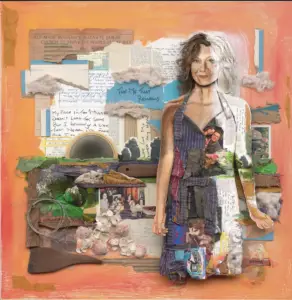
The most powerful songs are often fueled by life experience, and in the past few years, Amy Grant has had more than her share of challenging events, including open-heart surgery, a bike accident that left her with a traumatic brain injury, and throat surgery that caused the six-time Grammy winner to have to learn to sing again. Through it all, Grant persevered and navigated her recovery with the help of her faith, family, and friends. She’s channeled her experiences into a compelling collection of songs on The Me That Remains, her first album of all-original songs in 13 years, releasing May 8 via Thirty Tigers.
“I feel like I’ve witnessed a lot of life. It’s a very songwriter record,” Grant tells Everything Nash. “I don’t want to write songs anymore that don’t take me somewhere.”
The timing of the release of The Me That Remains comes as Grant is also mourning the loss of Grand Ole Opry member and beloved songwriter, Don Schlitz.
“We’ve all been celebrating the life and work of Don Schlitz, and just trying to imagine going forward not having his quirky, lovable self in another songwriter circle,” Grant reflects. “I can’t wrap my head around it. But just listening to his songs, every one painted a specific picture. His songs took you somewhere, and I’m sure his passing inspired every songwriter to be like, ‘What’s the point of writing it if it’s not going to take you somewhere?’”
Amy Grant Overcomes Challenges That Led to ‘The Me That Remains’
The Me That Remains is being hailed as Grant’s most introspective work, and that’s not surprising considering what she’s endured in the past few years. In 2020, she accompanied her husband, Vince Gill, to an appointment with a cardiologist, and while his heart checked out just fine, the doctor told Grant she needed to have some testing. She felt okay, and resisted at first, but the test results revealed a rare congenital heart condition. She underwent surgery in February 2021 to repair it.
In July 2022, Grant was riding her bike when she hit a pothole. Thankfully, she was wearing her helmet, a decision that undoubtedly saved her life, but she sustained a brain injury that led to a lengthy recovery. In January of 2024, she had surgery for a cyst in her throat that caused her to have to learn to sing again. As if all that wasn’t enough, she also had shoulder surgery.
As Grant eased back into normal life with Gill and their blended family, recording a new album wasn’t on her to-do list at all. The Me That Remains unfolded slowly and very organically as she enlisted acclaimed singer/songwriter/musician/producer and Songwriter Hall of Fame member Mac McAnally to help her record a few songs.
“The first experience in the studio with Mac happened in January of ’25,” Grant recalls. “I called him to say, ‘Can you help me get a few things recorded?’ He came to the house for me to record the vocal, and I was saying, ‘This was so much fun!’ And he said, ‘Yeah!’ Six weeks went by, and I said, ‘Hey, can we do that again?’ Once again, it was so much fun. And then another month went by, and it was really going into the third and final recording session, he said, ‘You know you’ve got a record here.’ I never had a recording experience like that before.”
The Message in ‘The Me That Remains’
The lyrics on the new album are thoughtful and vulnerable, particularly on the title track, where Grant sings, “Life cut me wide open when my head hit the ground / Wasn’t my time for dying, guess my soul just stuck around / Out of this wreckage, I’m beginning to claim / The gifts in the healing, and the me that remains.”
“That song was really written after a long recovery from that bike accident and my brain injury. That really did change the trajectory of my life,” says Grant, who co-wrote the song with McAnnally. “I had to really simplify in order to heal. When you’re not just busy all the time with a bunch of little things, then you rediscover things that matter to you that you had not given attention to, And for me, one of those things was songwriting.
“I love this phrase: ‘Space is peace. It can be space in your head. It can be space in your physical environment,” she adds. “Life just gets cluttered. Our bedside tables get cluttered. Our desks get cluttered. And to me, you just have to keep returning to the clutter and simplifying it, whether that’s your schedule or your environment or your brain. It’s okay just to take deep breaths and go ‘Shhhhh.’”
Prior to writing “The Me That Remains” in the summer of 2024, Grant recalls a neuropsychologist at Vanderbilt running tests to see how she was recovering.
“It was three different tests, a lot of puzzles, memory, vocabulary, all kinds of stuff,” Grant remembers. “He was very pleased with the results of two of the tests and was disheartened by one of the tests. He said, ‘What do you feel like your approach right now is in life?’ And I said, ‘I feel myself just pulling back, processing it so slow.’ He said, ‘I’m going to tell you to do the exact opposite, just lean in.’ I had those tests done a few weeks before that song. And I was just trying to wrap my head around it and lean in.”
“The Me That Remains” says, “My face in the mirror doesn’t look the same / But I recognize a light in my eyes that never did fade / And I’m gonna find / Yeah find and revive the me that remains.”
“I didn’t realize it was going to be a song,” Grant admits. “I was just writing a poem, and then it became a song. I thought it was so specific to me, I wondered if anybody else could relate to this. And almost without exception, anybody in the back half of their life is like, ‘Oh my gosh! This is me!’ We’re all recovering from something, and yet every day you just have to say, ‘I’ve got to wrap my arms around my own life. I’ve got to welcome my own self with whatever I have and lean in.’”
The Songs and Collaborations on ‘The Me That Remains’
View this post on Instagram
The album features a collaboration with Ruby Amanfu on “How Do We Get There from Here,” a thought-provoking anthem co-written by Grant and Amanfu. Gill joins her on “Friend Like You.”
“He makes everything sound better,” she says of her husband of 26 years. “He and I haven’t sung that [live on stage] yet. You can write something, but he would always say, ‘You don’t really know a song until you’ve toured it, until you’ve sung it every night,’ and we haven’t sung it since we did it in the studio.”
To celebrate the release of The Me That Remains, Grant will be doing a hometown show in Nashville on May 8th at the Ryman Auditorium. She will also be touring this summer.
“I’m trying to just show up in different places. … I’m doing a run of all the City Wineries,” the Kennedy Center honoree says. “I want these songs to be discoverable, and so I want to show up in places that I haven’t shown up in the past. I would love for somebody who doesn’t have any history with my music to hear these songs.”
The Legacy of Amy Grant And Her Music
It’s hard to imagine anyone not knowing Grant’s music. During her five-decade career, the 65-year-old icon has earned over 2.2 billion global streams, sold more than 30 million records, and achieved numerous firsts, among them being the first artist in Contemporary Christian Music to achieve a platinum record, perform on the Grammy Awards, and to reach No. 1 on the pop charts.
Grant is excited about sharing music from this chapter of life with longtime fans who have shown up for decades to hear such iconic hits as “Baby Baby,” “Every Heartbeat,” “El Shaddai,” “That’s What Love is For,” “House of Love” and many others.
“I love walking down memory lane,” Grant says. “But am I doing a disservice to these loyal concert attendees? Should we talk about now? I just have so much joy for making music, for writing music and having new songs to sing, so I’m going to continue that trajectory.”
Amy Grant’s Tender “The Other Side of Goodbye” Song
The album closes with “The Other Side of Goodbye,” a poignant song about her mother leaving this world that features her daughters, Sarah Cannon and Corrina Gill.
“I had the phrase—the other side of goodbye—for a couple of years. I thought at some point it will come to me what that song should be about. And as I was leaning in in my process of life, taking that doctor’s advice to lean in, I took out my notebook,” she says of penning the lyric. “I reached out to Tom Douglas and said, ‘Hey, any chance you want to help me with this song? I’ve got a finished lyric, but no sacred cows.’ I love to write music, but I feel like my strong suit is writing lyrics. Tom texted and said, ‘I’ll let you know in five minutes.’ I sent him the lyric, and he texted me back and said, ‘I’m on it.’ So he had a couple of different ideas, and we made a few changes.”
Grant’s mother, Gloria, passed away on April 30, 2011, at the age of 80, following a battle with dementia.
“That experience of my mother’s passing is so vivid. She was in hospice care for almost three weeks in a bedroom at Vince’s and my house,” Grant says. “Lots of storytelling happened around her bed, reminiscing and family coming in all hours of the day and night just to sit with her. The last day and half, she’d been unresponsive, and my sisters and I decided to have a girl’s night.
“Hospice would come by and would say, ‘She’s not actively dying,’ even though she clearly had faded,” Grant recounts. “She was beyond communicating. Her eyes were closed, but we sat around her bed, and we told stories for several hours and talked to her. My dad used to say, ‘Hearing is the last thing to go,’ and we came very intentionally. Each one of us had written down ten phrases that would jog our memory for a story about mom, and we went around the circle, my sisters and me, and told stories about mom.
“And the next morning when hospice came in, they said, ‘Well she’s actively dying now,” Grant adds. “We had remembered her and celebrated her, and then it was almost 24 hours before she breathed her last breath. Her eyes opened wide, she got this look, everything I described [in the song]. It was like Disneyland with no lines when you were a kid, so I had said those phrases describing her face, and I thought, ‘Oh my gosh, this is the song!’”
In the tender lyric, Grant sings, “I can’t forget my mother’s face / As we watched her fade and slowly take the final breath of her sweet life / I swear she lit up like a child / Like a kid on a carnival ride Like Disneyland without any lines / Fireworks on the 4th of July / I guess she was seeing the other side / Oh, the other side / The other side of goodbye.”
“What I love about a song is it’s a great companion,” Grant says as the interview draws to a close. “I hope these songs are good company. I hope they make people curious about life and about themselves and about how we can love each other better. I hope it piques people’s curiosity about people’s faith and what’s on the other side. I just keep thinking it is a noisy world. And to me, it will be a win if somebody hears any one of these songs and says I’d like to hear that one again. To me, that’s a win.”
This story was written by Deborah Evans Price.
Photo Credit: Ed Rode